


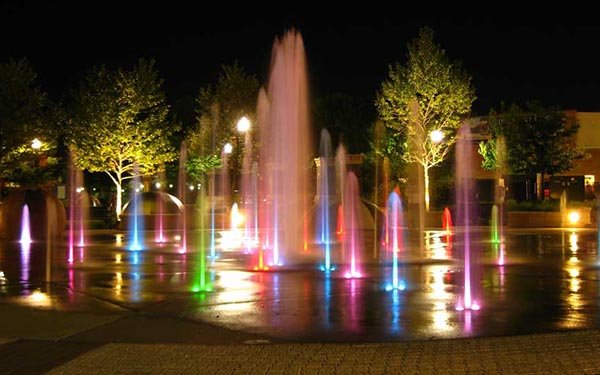
Elgin, Illinois is a city of about 115,000 people on the Fox River, about 35 miles northwest of downtown Chicago. It has three Metra stations on the Milwaukee District West line, a riverfront downtown with a casino and a performing arts center, and neighborhoods that run from 1880s historic districts to newer master-planned communities and two gated 55+ communities. Redfin put Elgin’s median sale price at about $360,000 for the three months ending August 2026. Because Elgin is so big, the school district, the property taxes and even the feel of a neighborhood can change a lot from one side of town to the other.
I’m Dana Gallagher, a broker with Berkshire Hathaway HomeServices Starck Real Estate. Elgin is one of the Northwest Suburbs communities I serve, and many of my past clients live here. Here’s what I want every buyer to know before touring homes in Elgin.
Where Elgin Is and What the Commute Looks Like
Elgin sits mostly in northern Kane County, and a smaller eastern portion extends into Cook County (Hanover Township). The city was founded in 1835 by James T. Gifford and incorporated in 1854. It grew up around the Fox River and the Elgin National Watch Company, which opened in 1864 and was once the city’s biggest employer. Randall Road, Route 31, Route 25 and U.S. Route 20 are the main local roads, and the Jane Addams Memorial Tollway (I-90) runs along the city’s north side.
By train: Elgin has three Metra stations on the Milwaukee District West (MD-W) line to Chicago Union Station: National Street and Elgin (Chicago Street), both downtown, plus Big Timber Road on the far west side, which is the end of the line. (Elgin isn’t on the UP-West line; that one runs through Geneva and West Chicago.) On Metra’s current weekday schedule, the fastest morning express trains take about 59 to 61 minutes from the two downtown stations and about 67 minutes from Big Timber. Most other trains take about 75 to 83 minutes. Off-peak trains run about once an hour. Always check Metra’s current schedule before you count on a train.
By car: I-90 has Tollway interchanges at Randall Road, Route 31 and Route 25. That makes it easy to head east toward Schaumburg and O’Hare or west toward Huntley and Rockford. By map estimates, downtown Elgin is about 15 miles from Woodfield/Schaumburg, about 26 miles from O’Hare and about 41 road miles from the Loop. Schaumburg is roughly 25 minutes without traffic, and St. Charles (about 10 miles) and Huntley (about 14 miles) are both around 20 minutes. Rush hour can stretch any of these drives a lot, especially trips to O’Hare and downtown Chicago.
Elgin Neighborhoods and Housing Styles
With more than 40,000 housing units, Elgin has some of the widest housing variety in the Northwest Suburbs. Here’s a rough guide by area:
- Historic near-downtown neighborhoods. The Elgin Historic District covers part of Gifford’s original 1842 plat, including Gifford Park, Elgin’s first public park. It was listed on the National Register of Historic Places in 1983. North of downtown on the east side of the river, the Spring/Douglas Historic District runs about 12 blocks along Spring Street and Douglas Avenue. Most of its homes date from 1886 to 1920, and in 1884 a local newspaper called Douglas Avenue “Elgin’s Fashionable Avenue.” Elgin also has the Elgin National Watch Factory and DC Cook/Lovell historic districts, plus a citywide Bungalow Thematic Historic District. If you love Victorian, Colonial Revival, Prairie-style or bungalow homes, start here. Just know that exterior changes in a local historic district follow the city’s design guidelines.
- East side near Lords Park. Established neighborhoods of older homes surround the 108-acre Lords Park and the Spring/Douglas district. Many of Elgin’s character homes are here, often on bigger lots than you’ll find downtown.
- The west side and the Randall Road corridor. This is where you’ll find most of Elgin’s newer subdivisions, close to Randall Road shopping, Elgin Community College and Advocate Sherman Hospital (1425 N. Randall Road):
- Randall Ridge. Single-family homes built mostly from the mid-1990s to about 2010, north of Route 20 and west of Randall Road.
- Highland Woods. A master-planned clubhouse community by Crown Community Development. It has an owners’ club with a fitness center and resort-style pool, about 5 miles of walking and biking paths, an 18-acre lake, 196 acres of open space, and Country Trails Elementary School on site.
- Bowes Creek Country Club. A Toll Brothers community of ranch and two-story homes built around an 18-hole, Rick Jacobsen-designed public golf course with a clubhouse and restaurant. New-construction homesites are essentially sold out, so today you’re buying resale.
- Townhomes and condos. You’ll find attached homes both downtown and on the west side. A few communities that come up often:
- River Park Place. Brick row townhomes built from 2004 to 2011, just east of the Fox River and north of National Street, a short walk from downtown and close to the National Street Metra station. Units run about 1,875 to 2,400 square feet, many with rooftop decks.
- The Reserve of Elgin. Townhomes built in the mid-2000s off Bowes Road, west of Randall Road, near Randall Road shopping and the library. The HOA covers exterior maintenance, lawn care and snow removal.
- Mulberry Grove. A west-side townhome community (ZIP 60123), including homes built in the early 2000s with two-car garages.
One important tip: Elgin is split among several school districts, and the line can run right through an area you’re considering. Highland Woods and Randall Ridge, for example, are generally served by Central Community Unit School District 301. Listing data puts nearby Bowes Creek and The Reserve of Elgin in U-46 (South Elgin High School), and most of the city is in U-46. Always confirm the schools for the exact address before you write an offer.
Elgin Home Prices and the 2026 Market
Each data source measures things a little differently. Here’s what they showed recently:
- MRED (Midwest Real Estate Data, the local MLS): In July 2026, the median sale price for detached single-family homes in Elgin was $441,000. Over the 12 months through July, it was $403,750 (up 6.3%). Attached homes (townhomes and condos) had a $297,500 median in July and a $288,700 median over the 12 months. At the end of July, 143 homes were for sale (98 detached, 45 attached).
- Months of supply: In June 2026, the Chicago Association of REALTORS® reported 1.4 months of supply for Elgin, up from 1.2 a year earlier (June median sale price: $373,250). Supply that low generally favors sellers.
- Redfin: Over the three months ending August 2026, Elgin’s median sale price was about $360,000 (up 8.0% year over year). Homes sold for about 100.7% of list price on average, and the median time on market was 49 days.
- Zillow: The Zillow Home Value Index for Elgin was $339,753 as of August 31, 2026, up 4.4% over the past year.
- Realtor.com: In August 2026, Elgin’s three main ZIP codes had about 138 active listings: 34 in 60120, 50 in 60123 and 54 in 60124. (These ZIP codes also include some areas outside city limits.)
Figures from MRED, the Chicago Association of REALTORS®, Redfin, Zillow and Realtor.com, June–August 2026. Ask me for the latest numbers.
Typical prices by home type (recent public sales and listings):
- Condos and townhomes: Most sell in the high $200,000s to low $300,000s, and the 12-month median for attached homes was $288,700 (MRED, July 2026). Recent examples include townhomes in The Reserve of Elgin that sold for $320,000 and $325,000 (July and September 2026) and a Mulberry Grove townhome that sold for $319,900 (August 2026). Newer downtown and golf-course townhomes are listed higher: River Park Place listings ran $349,900 to $379,800, and Bowes Creek townhomes were listed around $390,000 to $400,000 in September 2026.
- Older and historic homes: In ZIP 60120, which covers downtown, the east side and both historic districts, Realtor.com’s median listing price was $330,000 in August 2026. Price depends heavily on size, condition and updates.
- Newer west-side single-family homes: Highland Woods had 17 sales from January through July 2026, ranging from $394,000 to $970,000, and most landed between about $520,000 and $750,000. Listing-site data puts Bowes Creek Country Club’s 2026 median sale price at about $543,000, and its September 2026 listings ranged from about $390,000 to $1.2 million (including townhomes and the 55+ section).
- 55+ communities: Edgewater by Del Webb had 18 sales from April through September 2026, ranging from $350,000 to $637,000. Most were between about $360,000 and $550,000. Regency at Bowes Creek is small and tightly held: 2025 MLS medians were $420,000 for attached homes and $470,000 for single-family homes (8 sales), and a ranch home there sold for $475,000 in July 2026.
What this means for you: Elgin is balanced compared to some of its neighbors, but well-priced homes still draw multiple offers. Get fully pre-approved before you tour. (Here’s why pre-approval matters.)
Thinking of selling a home before you buy? Start with a free home value estimate so you know your numbers.
Elgin Schools
Elgin is served by three public school districts, and which one you’re in depends entirely on the address:
- School District U-46 covers most of Elgin. It’s the second-largest school district in Illinois, serving nearly 34,000 students in PreK–12 across 55 school buildings and 90 square miles. It also includes Bartlett, Hanover Park, South Elgin, Streamwood, Wayne and parts of several other towns. U-46 has five comprehensive high schools, and Elgin High School and Larkin High School are the two in Elgin. (The others are South Elgin, Bartlett and Streamwood.)
- Central Community Unit School District 301 serves much of Elgin’s far west side, including Highland Woods and Randall Ridge. It has four elementary schools, two middle schools (including Prairie Knolls Middle School) and Central High School in Burlington, with more than 5,000 students across about 83 square miles.
- Community Unit School District 300 serves some Elgin addresses too. D300 covers all or part of 15 municipalities, including Algonquin, Carpentersville, Huntley and Elgin.
I describe the districts neutrally on purpose: every family weighs schools differently. For test scores and other data, look up each school on the Illinois Report Card (illinoisreportcard.com). Then confirm the assigned schools using each district’s school locator for the specific address. The City of Elgin also publishes a school district boundary map.
Elgin Community College has its main campus on 232 acres at 1700 Spartan Drive in southwest Elgin. Its district reaches parts of five counties, and the campus Arts Center hosts performances all year.
Downtown, the Fox River and Things to Do
- Downtown Elgin and the riverfront. Downtown sits right on the Fox River, with the two downtown Metra stations, restaurants and shops. Longtime favorites include Al’s Cafe & Creamery on DuPage Court, known for from-scratch comfort food and its Burns’ Malt, and Elgin Public House on East Chicago Street, with burgers and craft beer.
- Downtown events. The Downtown Elgin Market runs Fridays from June through September on S. Riverside Drive, with local produce, makers, food trucks and live music. La Fiesta de Elgin, the city’s Mexican Independence Day celebration with a car caravan, live music and fireworks at Festival Park, was held September 12 in 2026. In October, Nightmare on Chicago Street turns downtown into an immersive horror event (October 16–17, 2026).
- Grand Victoria Casino. This casino floats on the Fox River at 250 S. Grove Avenue and opened in 1994. It has slots, table games, restaurants and a Caesars Sportsbook.
- The Hemmens Cultural Center. The city-owned performing arts venue at 45 Symphony Way is where the Elgin Symphony Orchestra performs.
- Elgin History Museum. Housed in “Old Main,” an 1856 Greek Revival building originally built for Elgin Academy.
- Lords Park. A 108-acre park on the east side, established in 1892. It’s home to the free Lords Park Zoo (bison, elk and deer), the Elgin Public Museum, the historic Pavilion and a family aquatic center.
- Wing Park. A 121-acre park on the west side, opened in 1903. It has the Wing Park Bandshell for summer concerts, a 9-hole golf course and a family aquatic center.
- Trout Park. Since 1972, this 44-acre park has been a designated Illinois Nature Preserve with a rare stand of white cedar trees. It also has riverfront fishing and access to the Fox River Bike Path.
- Hawthorne Hill Nature Center. A 67-acre natural area with two ponds, about 2 miles of looped trails and an interactive nature center.
- Golf. Besides Wing Park, there’s The Highlands of Elgin (875 Sports Way) and the public course at Bowes Creek Country Club.
55+ Communities in Elgin
Elgin has two gated, age-restricted communities. Both are resale-only today:
- Edgewater by Del Webb. About 1,000 single-family ranch homes off the Randall Road corridor, built by Del Webb in roughly 2005 to 2015. Life centers on the 23,000-square-foot Creekside Lodge, with indoor and outdoor pools, a fitness center, and tennis, pickleball and bocce courts, plus walking paths and a busy calendar of clubs. It’s much smaller than Sun City Huntley. If you’re comparing the two, read my insider’s guide to Del Webb Sun City Huntley and my breakdown of Del Webb Huntley HOA costs, rules and taxes.
- Regency at Bowes Creek Country Club. The 55+ section of Bowes Creek, with about 350 single-family homes and townhomes, many of them ranches with first-floor primary suites. It has a private clubhouse, an outdoor pool, bocce and tennis, and the neighborhood golf course next door.
HOA dues and what they cover change over time, so I always pull the current HOA documents before you make an offer. As a Seniors Real Estate Specialist (SRES), I also help downsizers plan the whole move, from pricing the current home to connecting with trusted local senior resources.
Property Taxes in Elgin
Let’s be honest: property taxes are a big part of the monthly payment in Elgin, just like everywhere in the collar counties. According to the U.S. Census Bureau’s American Community Survey (2024 one-year estimates), the median real estate tax paid by Elgin homeowners was $6,185 a year. That compares to $7,219 in Kane County, $5,399 statewide in Illinois and $3,211 nationally.
A few things to know:
- Taxes are paid a year behind. In Kane County, the 2025 taxes were billed in 2026 in two installments, due June 1 and September 1, 2026.
- Kane vs. Cook. Homes on the Cook County side of Elgin are billed and assessed by Cook County, which runs on a different schedule. Check which county a home is in.
- Exemptions matter. Owner-occupants can get a General Homestead Exemption, and there are additional senior exemptions and a Senior Assessment Freeze for those who qualify. Make sure every exemption you qualify for is applied.
- The exact bill depends on the address. Tax rates vary with the school district and other taxing bodies, so before you make an offer, I pull the actual tax history for the home.
Pros and Cons of Living in Elgin
Pros
- Three Metra stations, including express trains that take about an hour to Union Station
- A riverfront downtown with the Hemmens, the symphony, museums and a casino
- A huge range of housing, from historic homes to newer west-side subdivisions and two 55+ communities
- Big city parks, a free zoo, nature preserves and the Fox River Bike Path
- A major hospital and a community college right in town
Cons
- The school district varies by address (U-46, Central 301 or D300), so you have to check each home
- Property taxes are well above the national median
- Randall Road traffic gets heavy at peak times
- Many older homes in the historic areas need updates, and historic-district rules apply to exterior changes
- It’s a big city, so the feel can change from one neighborhood to the next. Tour at different times of day.
Who Elgin Is Best For
In my experience, Elgin tends to be a great fit for:
- Chicago commuters who want a choice of three train stations
- Buyers who love character homes in the historic districts
- Families and move-up buyers looking at newer west-side subdivisions with clubhouse amenities
- Active adults and downsizers considering Edgewater or Regency at Bowes Creek
- Buyers who want value and variety within reach of I-90 and Randall Road
Elgin vs. Huntley and St. Charles
Elgin vs. Huntley: Huntley is a smaller village (about 28,000 people vs. about 115,000 in Elgin, per the Census Bureau) with more newer construction and Sun City Huntley, but it has no Metra station. Elgin gives you the train, a larger downtown and more historic housing. Read my full guide to moving to Huntley, IL.
Elgin vs. St. Charles: St. Charles, just south along the Fox River, is another popular riverfront town. See my honest guide to moving to St. Charles, IL.
Still comparing towns? My guides to Crystal Lake, Algonquin, Cary and Lake in the Hills can help.
Ready to Look at Homes in Elgin?
Before real estate, I spent more than 28 years in public service, and I still believe in doing the homework so my clients don’t have to guess. With so many past clients in Elgin, I know how much the right block, school district and tax bill matter here. I’d love to help you figure out which part of Elgin fits your budget, commute and lifestyle.
- Search current homes for sale
- Find out what your current home is worth
- Contact me or call or text 224-858-0022
Dana Gallagher, Broker (SRES, ABR, SRS) | Berkshire Hathaway HomeServices Starck Real Estate | 13300 Rt 47 Ste 200, Huntley, IL 60142 | mybrokerdana@gmail.com
Frequently Asked Questions About Moving to Elgin, IL
Is Elgin, IL a good place to live?
For many buyers, yes. Elgin offers three Metra stations on the Milwaukee District West line, a riverfront downtown with arts and entertainment, large parks and nature preserves, and a wide range of homes, including historic districts, newer west-side subdivisions and 55+ communities. The trade-offs are property taxes well above the national median and school assignments that vary by address.
What is the median home price in Elgin, IL?
Redfin reported a median sale price of about $360,000 for the three months ending August 2026, up 8.0% from a year earlier. According to MRED, the local MLS, detached single-family homes had a median of $403,750 over the 12 months through July 2026, and townhomes and condos had a median of $288,700. Newer west-side and golf-course homes often sell for $500,000 or more.
What school district is Elgin, IL in?
Most of Elgin is in School District U-46, the second-largest district in Illinois, whose Elgin high schools are Elgin High School and Larkin High School. Parts of the far west side, including Highland Woods and Randall Ridge, are in Central Community Unit School District 301, and some addresses are in Community Unit School District 300. Always verify the schools for a specific home.
How long is the train from Elgin to Chicago?
Metra’s Milwaukee District West line runs from Big Timber Road, Elgin (Chicago Street) and National Street to Chicago Union Station. On the current weekday schedule, the fastest express trains take about an hour from downtown Elgin, and most other trains take about 75 to 83 minutes.
What county is Elgin, IL in?
Elgin is mostly in Kane County, with a smaller eastern portion in Cook County. It’s on the Fox River, about 35 miles northwest of downtown Chicago.
Are there 55+ communities in Elgin, IL?
Yes. Edgewater by Del Webb (about 1,000 single-family ranch homes with a 23,000-square-foot clubhouse) and Regency at Bowes Creek Country Club (about 350 homes next to an 18-hole golf course) are both gated, age-restricted communities in Elgin.
Are property taxes high in Elgin, IL?
Compared to the national median, yes. Census Bureau survey data (2024) put the median real estate tax paid by Elgin homeowners at $6,185 a year, below the Kane County median of $7,219 but well above the national median of $3,211. The exact bill depends on the home’s school district and exemptions.
Last updated: September 2026 | Dana Gallagher, Berkshire Hathaway HomeServices Starck Real Estate